Measure the trench as a rectangular rock zone, then subtract the round pipe space.
Tools to have ready
- Tape measure
- Depth ruler
- Pipe size label
- Grade level
- Marking paint
How to take the measurements
Measure the planned trench route in feet.
Measure inside trench width in inches.
Measure the height that will actually be filled with rock.
Read the pipe diameter and count pipes in the trench.
Add waste for fabric folds, uneven trench walls, and spillage.
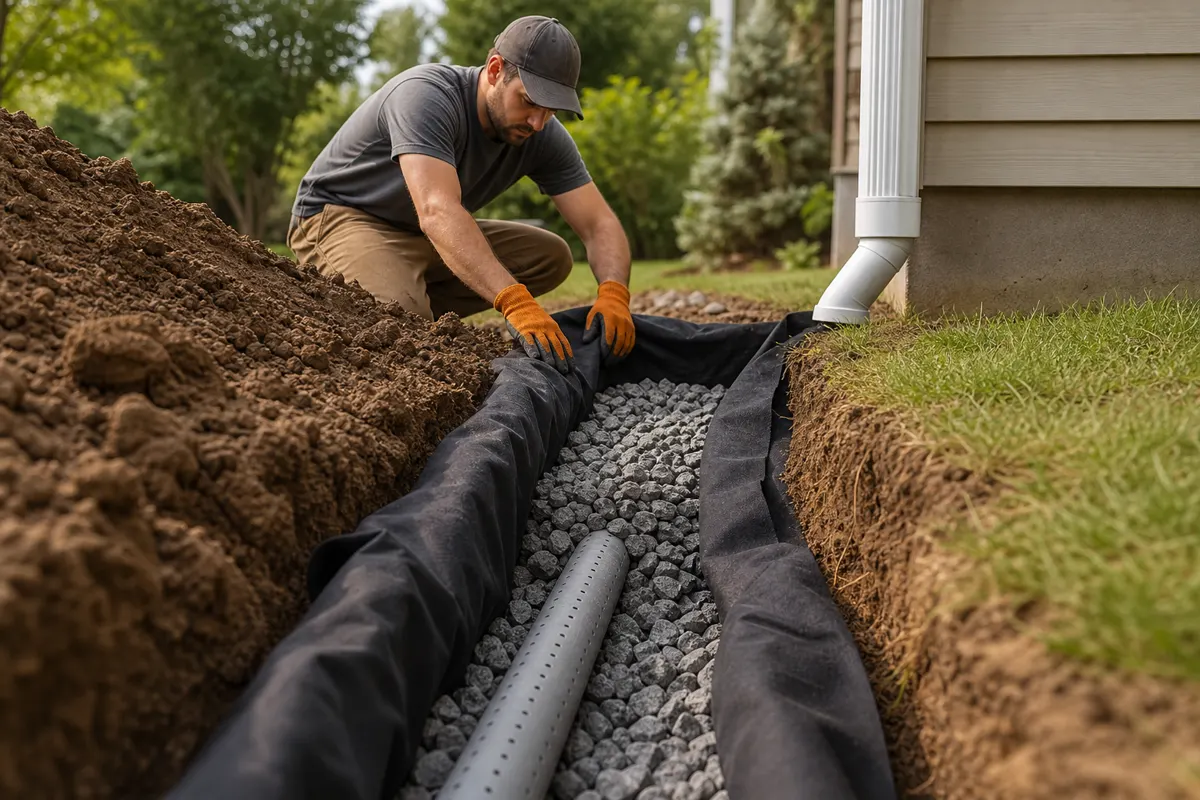
Drain trench cross-section
- 1Filter fabric
- 2Clean drain rock
- 3Perforated pipe
- 4Sloped trench
How the calculator works
Rock volume = trench length x width x fill depth - pipe cylinder volume.
Example: a 50 ft trench, 12 inches wide, and 12 inches deep loses the volume occupied by a 4 inch pipe.
What every field and unit means
Trench length
Total length of the gravel-filled trench.
Unit: ft or m. Measure the centerline of the trench route.Trench width
Inside trench width filled with rock.
Unit: in or cm. Measure wall to wall after excavation.Rock fill depth
Depth of rock inside the trench.
Unit: in or cm. Measure from trench bottom to top of rock fill.Pipe diameter
Outside diameter of pipe inside the rock zone.
Unit: in or cm. Use pipe outside diameter or nominal diameter as a planning value.Number of pipes
Count of pipes running through the trench.
Unit: count. Enter 0 for no pipe displacement.Drain-rock density
Bulk density for clean drainage rock.
Unit: lb/ft3 or kg/m3. Use supplier density for washed stone.Extra / waste
Percent added for cuts, spillage, edge cleanup, and small estimating errors.
Unit: percent. Use 5 percent for simple square work and 10 percent or more for irregular work. Do not enter 0 when the shape has curves, tapers, or hand trimming.Price per ton
Optional supplier price used to estimate material cost before delivery fees and taxes.
Unit: USD per US ton. Enter the quoted material price per US short ton. Leave 0 if you only need quantity.Assumptions and limits
- Pipe volume is treated as a smooth cylinder.
- Void space inside aggregate is included in bulk density.
- Drain slope, fabric, and outlet design are separate.
- Does not design hydraulic capacity.
- Does not verify outlet or slope.
- Jagged trench walls may need more waste.
Research basis: NDS French drain guidance, NIST unit conversions. Full methodology and image-credit notes are maintained on the Editorial Policy page.