Use volume when measuring a layer and use weight when converting a supplier quote.
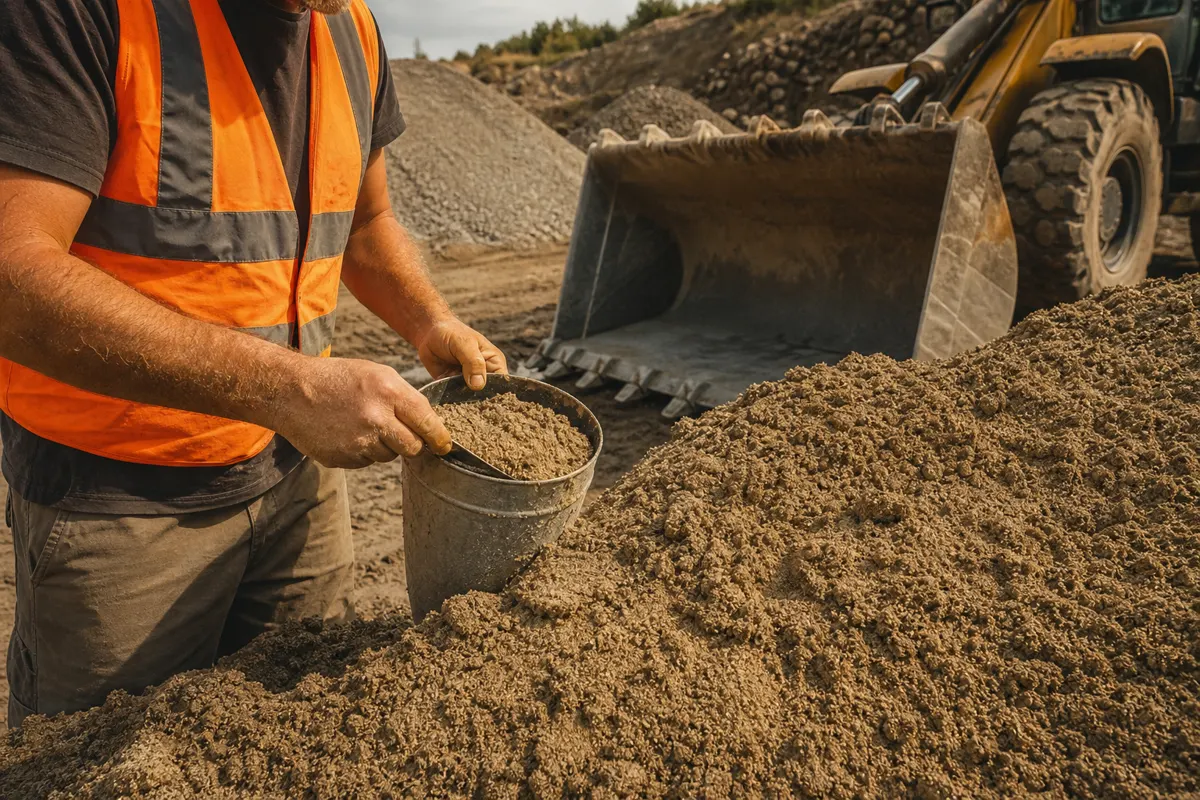
Tools to have ready
- Tape measure
- Depth ruler
- Supplier quote
- Moisture note
How to take the measurements
Choose whether you know yards or tons.
If measuring a layer, calculate or enter cubic yards.
Select dry, damp, or wet sand as a starting density.
Replace density with supplier data when available.
Use cost only for material price before delivery.
Sand conversion
- 1Measured volume
- 2Moisture condition
- 3Bulk density
- 4Calculated weight
How the calculator works
Weight = volume x density. Volume = weight / density.
Example: 1 cubic yard at 100 lb/ft3 weighs 1.35 US tons.
What every field and unit means
Convert from
Choose the known value.
Use volume if measuring an area; use weight if you have a supplier quote.Sand volume
Known sand volume.
Unit: cu yd. Enter cubic yards from plans or measurement.Sand weight
Known sand weight.
Unit: US tons. Enter US short tons.Sand condition
Changes the starting bulk density for moisture.
Pick the closest condition, then override density if known.Bulk density
Density used for bidirectional conversion.
Unit: lb/ft3 or kg/m3. Ask the supplier for dry or moist bulk density.Price per ton
Optional supplier price used to estimate material cost before delivery fees and taxes.
Unit: USD per US ton. Enter the quoted material price per US short ton. Leave 0 if you only need quantity.Assumptions and limits
- Wet sand can weigh more than dry sand.
- US tons are short tons.
- Bedding sand depth must be measured separately on project tools.
- Moisture is variable.
- Does not estimate washout or loss during placement.
- Specialty sands may need supplier-specific density.
Research basis: NIST unit conversions, CMHA paver construction guidance. Full methodology and image-credit notes are maintained on the Editorial Policy page.