Measure the full pad footprint and estimate base and surface layers separately.
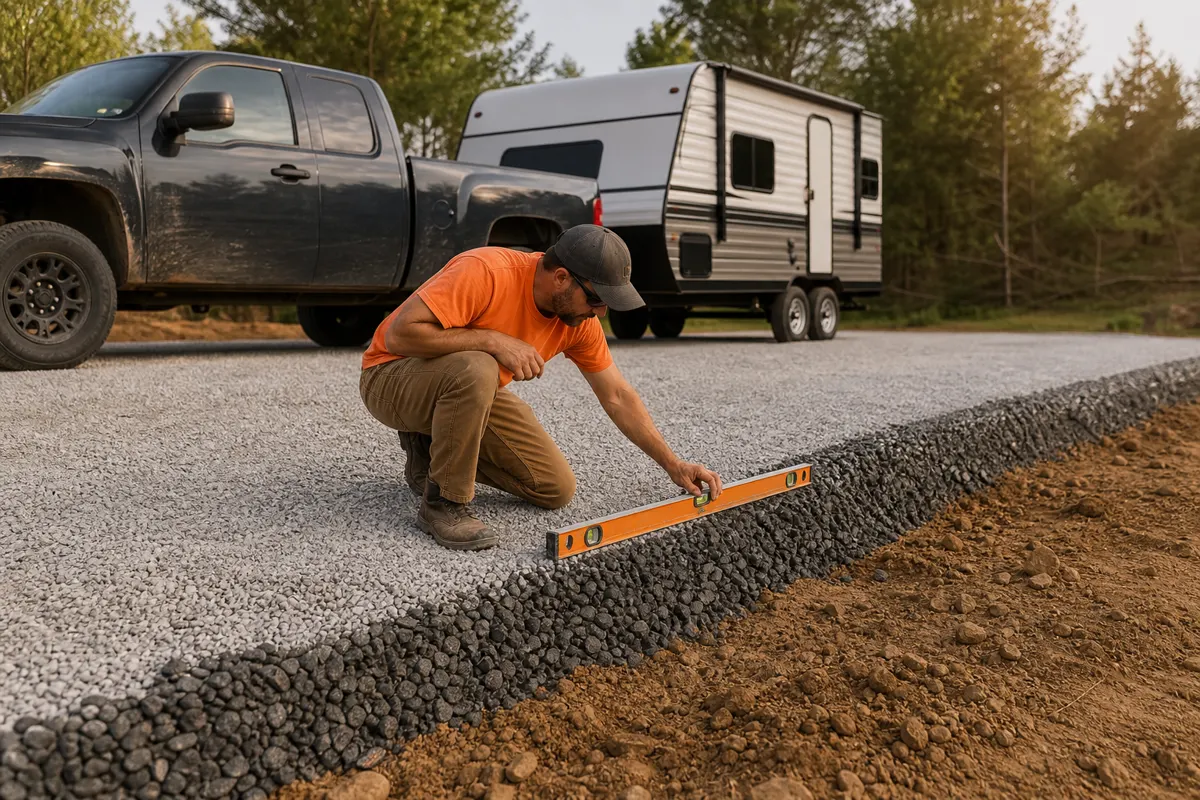
Tools to have ready
- Tape measure
- Marking paint
- String line
- Level
- Compactor plan
How to take the measurements
Mark the usable parking footprint.
Measure length and width in feet.
Choose a vehicle preset for starting depths.
Confirm base depth and surface depth separately.
Use drainage fall so the pad does not hold water.
Parking-pad cross-section
- 1Surface gravel
- 2Compacted aggregate base
- 3Prepared subgrade
- 4Drainage fall
How the calculator works
Each layer volume = pad length x pad width x layer depth. Delivery total is the sum of both layers.
Example: a 12 ft by 24 ft pad with 6 inches of base and 2 inches of surface is calculated as two layers.
What every field and unit means
Pad length
Finished parking pad length.
Unit: ft or m. Measure bumper-to-bumper parking space plus access clearance.Pad width
Finished parking pad width.
Unit: ft or m. Measure the full usable width including door clearance.Vehicle preset
Sets starting base and surface depths.
Pick the closest loading use, then edit depths as needed.Base depth
Compacted aggregate base depth.
Unit: in or cm. Measure planned structural base thickness.Surface gravel depth
Top gravel wearing layer depth.
Unit: in or cm. Measure finished loose or compacted surface layer thickness.Base density
Bulk density for road base or crusher run.
Unit: lb/ft3 or kg/m3. Use supplier density for base material.Surface density
Bulk density for surface gravel.
Unit: lb/ft3 or kg/m3. Use supplier density for top-course gravel.Compaction allowance
Loose material added to achieve compacted layers.
Unit: percent. Use the installer or supplier shrinkage allowance.Extra / waste
Percent added for cuts, spillage, edge cleanup, and small estimating errors.
Unit: percent. Use 5 percent for simple square work and 10 percent or more for irregular work. Do not enter 0 when the shape has curves, tapers, or hand trimming.Price per ton
Optional supplier price used to estimate material cost before delivery fees and taxes.
Unit: USD per US ton. Enter the quoted material price per US short ton. Leave 0 if you only need quantity.Assumptions and limits
- Heavy vehicles may need a designed base.
- Drainage slope and edge support are separate.
- Base and surface materials can have different densities.
- Does not design for subgrade strength.
- Does not include excavation haul-off.
- RV pads may need engineering or thicker sections.
Research basis: FHWA granular base guidance, NIST unit conversions. Full methodology and image-credit notes are maintained on the Editorial Policy page.