Measure the area and specified layer thickness, or convert a known cubic-yard quantity into tons.
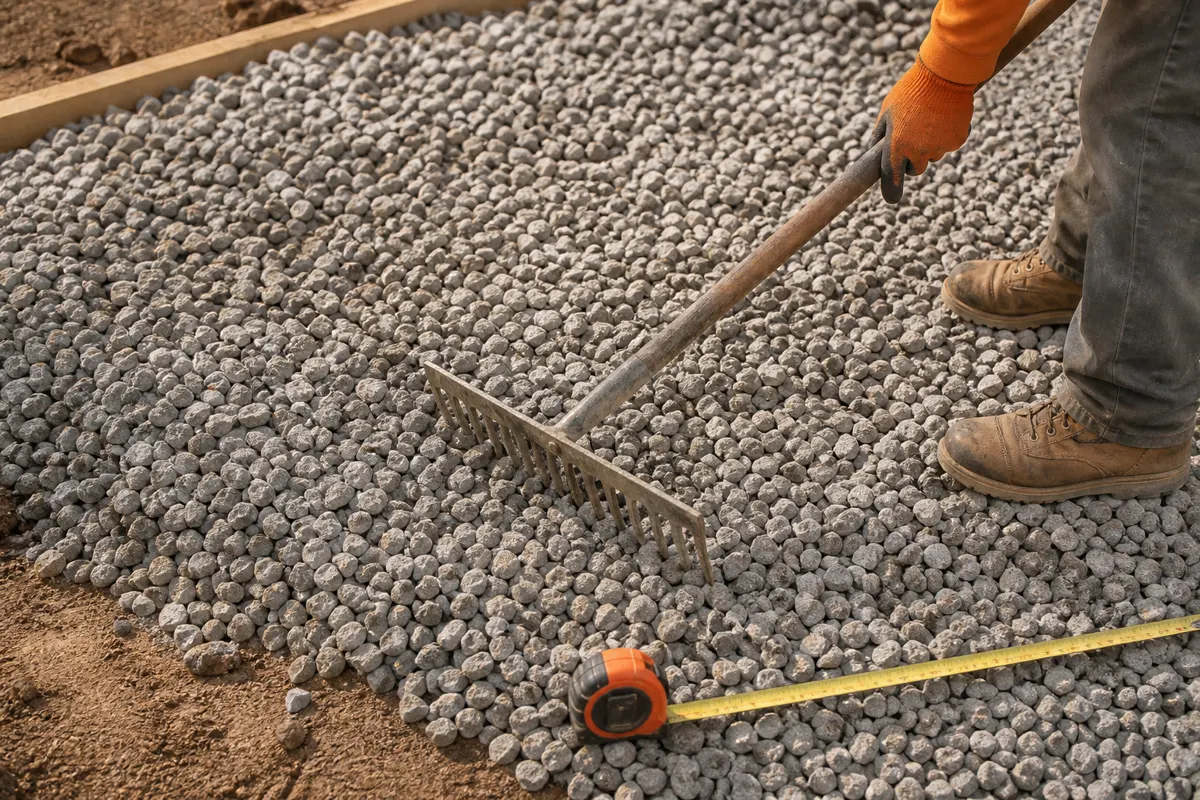
Tools to have ready
- Tape measure
- Project plan
- Depth ruler
- Supplier quote
How to take the measurements
Identify the exact area receiving #57 stone.
Measure square footage or use plan dimensions.
Enter specified stone depth in inches.
Use a density from the local supplier if possible.
Add waste for edges, raking, and uneven subgrade.
#57 stone coverage
- 1Finished surface
- 2Washed #57 stone
- 3Specified depth
- 4Prepared base
How the calculator works
Volume = area x depth, or use known cubic yards. Weight = volume x density.
Example: 200 sq ft at 4 inches deep equals about 2.47 cubic yards before allowances.
What every field and unit means
Starting measurement
Choose project area or known cubic yards.
Use known cubic yards from plans or area/depth from measurements.Project area
Surface area covered by #57 stone.
Unit: sq ft or m2. Measure or calculate total square feet.Known volume
Known cubic yards of #57 stone.
Unit: cu yd. Enter plan or supplier volume directly.Stone depth
Finished #57 stone layer thickness.
Unit: in or cm. Measure the specified layer depth.Supplier density
Editable #57 stone bulk density.
Unit: lb/ft3 or kg/m3. Replace the default with supplier tons per yard or density.Compaction allowance
Small allowance for settlement or placement.
Unit: percent. Set to 0 for loose drainage placement if appropriate.Extra / waste
Percent added for cuts, spillage, edge cleanup, and small estimating errors.
Unit: percent. Use 5 percent for simple square work and 10 percent or more for irregular work. Do not enter 0 when the shape has curves, tapers, or hand trimming.Price per ton
Optional supplier price used to estimate material cost before delivery fees and taxes.
Unit: USD per US ton. Enter the quoted material price per US short ton. Leave 0 if you only need quantity.Assumptions and limits
- #57 gradation and density vary by region.
- Clean stone compacts differently from crusher-run materials.
- Supplier sale unit may be tons or yards.
- Does not verify gradation compliance.
- Does not design drainage systems.
- Washed and unwashed products can behave differently.
Research basis: FHWA granular base guidance, NIST unit conversions. Full methodology and image-credit notes are maintained on the Editorial Policy page.